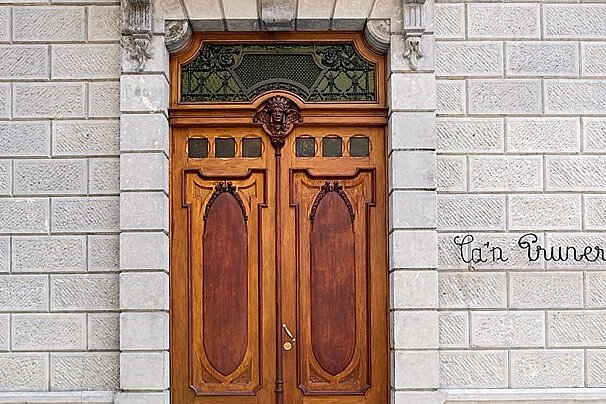
This museum is a naturalist entity dedicated to exhibiting and conserving the natural heritage of the Balearic Islands and making the general public aware of the importance of its preservation.
The Museu Balear de Ciències Naturals is the culmination of an idea that originated amongst a group of naturalists, enthusiasts and specialists in different branches of Biology and Earth Sciences. In 1980, they decided to found an association whose purpose was the creation and upkeep of a natural history museum and botanical gardens in the municipality of Sóller that dealt, principally, with the Nature to be found in its geographical surroundings. On 9th May, 1992, the Museu Balear de Ciències Naturals and the Jardí Botànic opened their doors to the public.
It has five exhibition rooms, an audiovisual and conference room, a reading room and library, services, a nature classroom to carry out educational workshops, plus various spaces dedicated to storing collections, consultation and work.
The collection includes fossils and artefacts that explain the history of natural sciences in the Balearic islands, such as photographs, specimens, reproductions and documents of the naturalists who have visited or worked here.