
Sights in Soller — 5 of Our Favourites

Discover and book the top Soller sights

a photo of soller botanical gardens mallorca majorca

1. Soller Botanical Garden

Location
Soller

Sóller is a botanist’s and enthusiast’s paradise. The Botanical garden is found in a country estate known as “Camp d’En Prohom”, on the outskirts of Sóller. Its primary purpose is to preserve rare or endangered species of the Balearics, and is the result of many years of study and hard work, and now hosts one of Spain’s most extensive wild flora seed banks.

The Botanical Garden of Sóller combines traditional and popular architecture with botany, as it is structured on terraces that group the plants in the garden according to their ecological needs or use.

There are different kinds of plants found in the Botanical Garden of Sóller such as flora of the Balearic Islands; flora of other Mediterranean Isles, specially from Corsica, Sardinia, Sicily, Malta and Crete. There are also species from the Canary Islands, an ecological farm / orchard (with the aim of studying and preserving all horticultural varieties of traditional vegetables and fruit trees), plants for medicinal and aromatic purposes - with plants that have been used traditionally to heal and/or season, and ornamental plants.

They also preserve frozen seeds of those species under greater threat. In 1997 the foundation “Fundació Jardí Botànic de Sóller” was formed. Its headquarters are in an old building built in 1906 located within the same country estate. Used as a Botanical Institute, it is a centre of study and research, where the laboratories, library, seed bank and herbarium are kept.

The Museum of Natural Sciences is located in the gardens.

Museu Balear de Ciences Naturals (Museum of Natural Sciences), Soller

2. Museu Balear de Ciences Naturals

Location
Soller

This museum is a naturalist entity dedicated to exhibiting and conserving the natural heritage of the Balearic Islands and making the general public aware of the importance of its preservation.

The Museu Balear de Ciències Naturals is the culmination of an idea that originated amongst a group of naturalists, enthusiasts and specialists in different branches of Biology and Earth Sciences. In 1980, they decided to found an association whose purpose was the creation and upkeep of a natural history museum and botanical gardens in the municipality of Sóller that dealt, principally, with the Nature to be found in its geographical surroundings. On 9th May, 1992, the Museu Balear de Ciències Naturals and the Jardí Botànic opened their doors to the public.

It has five exhibition rooms, an audiovisual and conference room, a reading room and library, services, a nature classroom to carry out educational workshops, plus various spaces dedicated to storing collections, consultation and work.

The collection includes fossils and artefacts that explain the history of natural sciences in the Balearic islands, such as photographs, specimens, reproductions and documents of the naturalists who have visited or worked here.
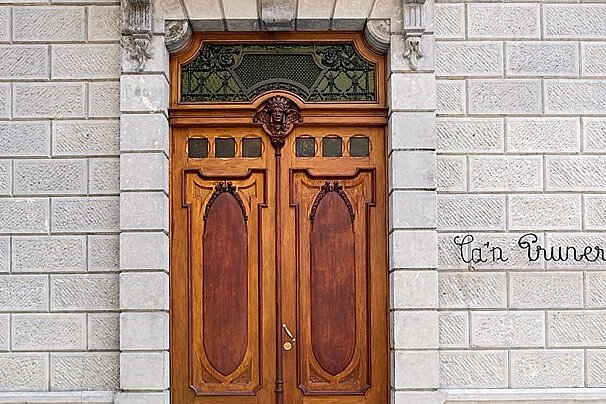
Can Prunera, Soller

3. Can Prunera

Location
Soller

Housed in a wonderful Modernist building, Can Prunera was built in the early 20th century and the museum was opened on 24 August 2009. The vast majority of works on display at this museum belong to the Fundació d’Art Serra.

On the ground floor and first floor are original furniture such as tables, chairs, beds, cabinets and cases, as well as paintings and sculptures. On the second floor, you can see the exhibition "From Modernism in the twenty-first century" - a collection of paintings belonging mostly to Serra Art Collection, which in recent years has been enriched through donations of works, individuals and artists.

The basement includes rooms dedicated to Juli Ramis, an artist from Soller who specialised in paintings of youth, cubist and abstract. In the garden, visitors can view the interior facade of the house and enjoy the sculptures on display.

Serra de Tramuntana, West Mallorca

4. Serra de Tramuntana, West Mallorca

Location
Soller

The Serra de Tramuntana mountains (translated as the "mountains of the north wind") run the length of Mallorca's northwestern coastline extending for almost 90km and claim some of the island’s most magnificent scenery. In 2011, it was declared a world heritage site by UNESCO under the cultural landscape category.

In a nutshell, the Serra de Tramuntana runs for 88km, from Andratx to Pollença, occupying 30% of the island's terrain at more than 1000km2. Ten peaks are over 1,000m here, most concentrated in the area around Lluc. The highest mountains are Puig Major (1,443m), Puig Massanella (1,348m) and Serra d’Alfàbia (1,069m). There are no rivers running through the Serra de Tramuntana though there are several mountain torrents which swell rapidly after rain. The Cuber and Gorg Blau reservoirs residing here are essential resources on an island so often affected by drought.

Much of the Serra Tramuntana consists of forested hills that give way to barren crags and peaks and the odd derelict blonde stone house or monastery. The mountain landscape could be described as timeless, as are the traditional mountain villages that dwell here. The western coastline is primarily rugged, with few beaches but instead pine-covered slopes leaning into the sea. Traces of the area’s history are still very much present in the form of ancient irrigation systems and dry stone terraces dating back to the Arabic occupation, where they made the most of the difficult agricultural landscape in the mountains.

The people of Mallorca have good reason to be grateful to the mountains - in winter they act as a buffer, shielding the plain from the fierce Tramuntana wind and absorbing most of the island's rain and snow. In summer, they provide a cool retreat from the heat of Palma and the south.

Palma to Soller Vintage Train Ride, Soller

5. Palma to Soller Vintage Train Ride

Location
Soller

The vintage carriages are still in use, providing a fantastic opportunity for tourists, and a relief for locals from the terrors of the old Palma-Soller road.

The train, all mahogany panels and brass fittings, leaves Palma amid a bustle of hisses, hoots and whistles before rattling down the city streets and into the suburbs. Soon you are out on the plain, passing small country stations and pigs rooting beneath the trees.

You can get off at Bunyola and visit the Tunel factory where Mallorca's herb-based liqueurs are made - the label shows a train emerging from a tunnel. Stay on the train and soon you start to climb, entering a 3-km tunnel before returning to daylight for the drop, through a dizzying series of bends, to Soller. 

To carry on to Port de Soller you can jump on the "Orange Express" - the tram the services that two towns.