
Castell del Rei
The hike to this remote mountain castle, 7 km north of Pollenca, is one of the loveliest in Mallorca.
Discover and book the top Mallorca sights
The hike to this remote mountain castle, 7 km north of Pollenca, is one of the loveliest in Mallorca.

Porreres is located inland in the south-east area of Mallorca. Having arrived to Porreres, any local person should be able to show you the road up to sanctuary, which formely housed a College of Humanities, one of the threee most important of rural Majorca.

The Cabrera Archipelago is a maritime-terrestrial national park which lies 10km off the south east coast of Mallorca.
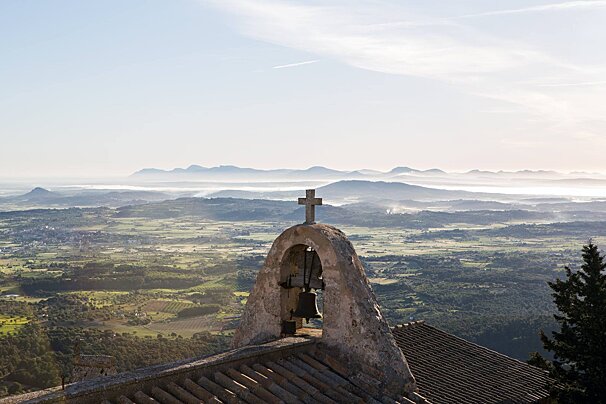
The Puig de Randa, rising 543m out of the plain, has been a place of pilgrimage ever since Ramon Llull founded Mallorca's first hermitage here in 1275.

The glory of Palma - a magnificent Gothic cathedral whose sandstone walls and flying buttresses seem to rise out of the sea.

Situated within the Son Real public estate, the necropolis is still an active archaeological site. Acquired by the Balearic Islands Government in 2002 with the aim of preserving its natural and ethnological wealth and, in particular, the archaeological sites.

Dark and cool, these limestone caves on the edge of Porto Cristo have become one of Mallorca's top tourist sights. Groups walk along 1200m of smooth paths exploring the magnificent stalactite formations within.
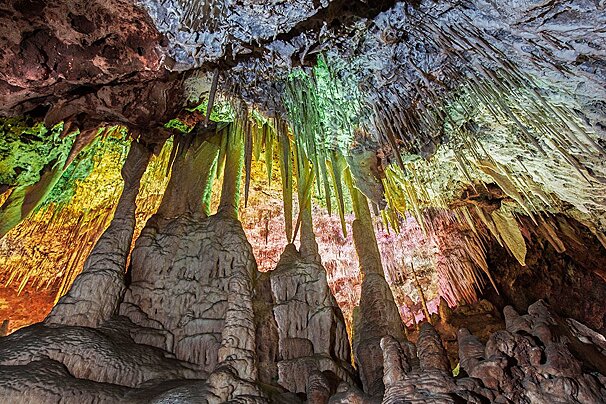
You cannot miss these caves as you drive from Manacor to Porto Cristo. Most people only want to visit one set of caves during their time on Mallorca and the giant billboards and flags at the entrance are an attempt to ensure that this is the one. In fact you are better off continuing to the 'Cuevas del Drach' or up the coast to the 'Coves d'Arta'.

S'Albufereta de Pollensa is a wetland nature reserve in the north of the island, however, it is largely private property. Visitors can drive along the main road from Pollenca to Alcudia to view the habitats.

This hilltop hermitage a few kilometres from the town of Petra is where Junipero Serra preached his last sermon in Mallorca before leaving to found the Mexican and Californian missions.

Located on the hillside of Sant Salvador above Arta this building dominates the skyline over the town of Arta.

The Ermita de Betlem was founded in 1805 by the monks of Saint Honoratus, Randa and the Holy Trinity of Valldemossa. The church has a solar clock and a rose window, and lies at the end of a cypress tree-lined driveway.

Pollentia was founded by the consul Qintus Caecilius Metellus in 123 BC in the strategic location between the bays of Pollenca and Alcudia. It was the most important city in the Balearics duing the Roman period and covered an area of 15-20 hectares.
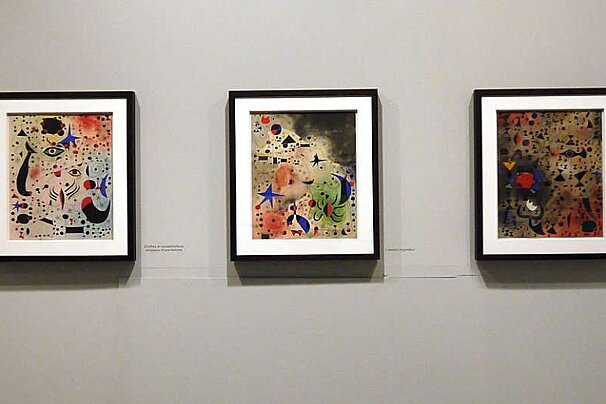
Curated by his grandson, Joan Miro Punyet, this exhibition will show case up to thirty of Miro's graphic works, many of which were inspired by, or created on, the Balearic Islands.

The square takes its name from Sa Llotja, the impressive Gothic market exchange building which overlooks it from one side. The decorative sandstone facade, contrasted with the lush green palm trees, makes for an idyllic setting. The plaza opens out towards the seaside promenade on one side and, on the other, tables and chairs from the surrounding restaurants spread out across the cobblestones. A great spot during the day and the evening.

The facade of this 13th-century church in Palma (remodelled after it was struck by lightning in the 17th century) is typically Mallorcan - a massive, forbidding sandstone wall with a delicately carved postal and a rose window at the centre.
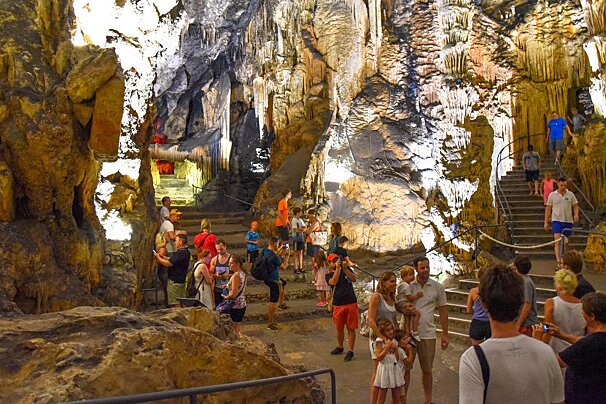
These caves near Arta, in the north-east of Mallorca, are a fascinating network of underground caverns whose weird stalactites and stalagmites conjure up mysterious images of Heaven and Hell. An early visitor was Jules Verne, the caves are said to have inspired his Journey to the Centre of the Earth.

The small and charming square of Plaça Cort, located in the heart of the city, is famous for the ancient olive tree ('Olivera de Cort') that stands in the centre. The square is named 'Cort' because it was here where the feudal court gathered. The town hall dominates the plaça, built between 1649 and 1680 by local architects Pere Bauçá, Miquel Oliver and Bartomeu Calafat, its façade has been decorated with Mannerist and Baroque style features.