S'Albufereta Nature Reserve
S'Albufereta de Pollensa is a wetland nature reserve in the north of the island, however, it is largely private property. Visitors can drive along the main road from Pollenca to Alcudia to view the habitats.
Our guide to what you must see when you visit Mallorca
There is just so much to see and experience in Mallorca. The island that offers something for everyone, including lovers of art, nature and history.
Dramatic landscapes, medieval villages, ancient castles and a magnificent cathedral are just a few of the reasons why visitors keep returning. These are some of the must-see sights and sites on the island.

Markets are a true part of every village and town in Mallorca, when once or twice a week its streets become lined with stalls selling local produce, leather, clothes, shoes, ceramics, livestock and everything in between.
Sineu is one such village, which bursts into action every Wednesday - its weekly market day. It's the most popular market on the island and it really feels like the whole town is involved. Soak up the atmosphere around Plaça Es Fossar. Apart from the market, Sineu is worth a visit being steeped in history, both Roman and Moorish, and was the second residence of Jaume II.
Another great place to visit for a true Mallorcan experience is Inca market, celebrated every Thursday. Famous for its leather goods, it gathers locals and visitors in search of the freshest regional produce or just a bargain. You can spend hours browsing through its hundreds of stalls so it's a great option for a day out, especially since Inca hosts some of the best traditional Mallorcan restaurants on the island which are perfect for a spot of lunch.
For lovers of the great outdoors, Mallorca really is a slice of heaven. There are secluded beaches, mountain trails, lakes, caves and wildlife reserves. One day trip option is to head to the uninhabited islet of Sa Dragonera, which is located at the western tip of the Serra de Tramuntana mountain range.
The islet of Sa Cabrera is a natural park and one of Mallorca’s top beauty spots. It famously includes an ecosystem of high ecological value, including one of the best-preserved sea beds in the Mediterranean. It’s 10 nautical miles to the south coast of Mallorca, and you either have to join a guided boat trip from the harbour of Sa Colònia de Sant Jordi or obtain a special permit for private boats.
S'Albufereta de Pollensa is a wetland nature reserve in the north of the island, however, it is largely private property. Visitors can drive along the main road from Pollenca to Alcudia to view the habitats.
The Serra de Tramuntana mountains (translated as the "mountains of the north wind") run the length of Mallorca's northwestern coastline extending for almost 90km and claim some of the island’s most magnificent scenery. In 2011, it was declared a world heritage site by UNESCO under the cultural landscape category.
The Cabrera Archipelago is a maritime-terrestrial national park which lies 10km off the south east coast of Mallorca.
Just off the coast road 5km south of Port d'Alcudia in the north west of Mallorca, the S'Albufera wetlands make a welcome relief from long stretches of crowded beach.
The Llevant Peninsula is found on the north east of Mallorca. This hilly terrain could almost pass for the Scottish highlands (on a good day!), with its covering of heathers and shrubs at the higher altitudes.
This 200-hectare nature reserve on a headland jutting out from the east coast of Mallorca is an oasis of peace amid a desert of high rise apartments and hotels.
Mallorca has a number of castles in different states of restoration. What sets Castell de Bellver in Palma apart is its circular foundation, which is unique in Spain. Its name means 'Beautiful View' in Catalan, which is what you'll be rewarded with when you visit. It has been used as a fortress and a royal residence, however, its longest function was as a prison. Currently, it houses the capital city's history museum.
A royal palace has stood on this site next to Palma's cathedral since the Muslim walis (governors) built their alcazar soon after the Arab conquest.
These are the most significant remains of the Talaiotic culture, which flourished in Mallorca between around 1300 and 800 BC.
Much of this 4000 square metres complex has been restored so that you can now see the remnants of the medieval fortress that it once was.
Castell d'Alaro is perched on top a rocky mountain above the town of Alaro in the west of Mallorca. A popular walk from the town (or further up the hill if you prefer to drive) takes you to a ruined castle and hilltop chapel offering spectacular views of the Tramuntana mountains and over towards Palma and all the way to the sea.
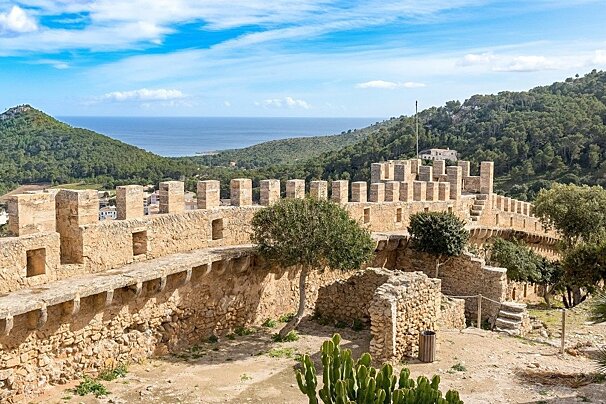
Capdepera was founded in 1300 and it was by royal decree that a fortress was built in which to house the residents, to protect them from pirates. This walled town became known as Capdepera Castle.
Pollentia was founded by the consul Qintus Caecilius Metellus in 123 BC in the strategic location between the bays of Pollenca and Alcudia. It was the most important city in the Balearics duing the Roman period and covered an area of 15-20 hectares.
There is no shortage of religious buildings in Mallorca, Palma alone is home to 55 churches. However, it's difficult to top the beauty of Palma's sandstone Cathedral La Seu which overlooks the serene Parc de la Mar on the seafront. It's one of the first landmarks you see on entering the capital from the airport and, it doesn't matter how many times I pass it, it will never fail to impress.
Mallorca's most sacred site - a former monastery in a spectacular setting in the Serra de Tramuntana mountains to the north west of Mallorca.
The construction of the church began at the end of the 19th century. It was overseen by priest Rubí and the builder Gaspar Bennàssar, who directed the works and built the bell-tower, the highest building in town known as Torre Rubí.
This old hermitage, 509m above sea level at the highest point of the Serra de Llevant near the town of Felanitx, was the senior house of Mallorca's monastic order and the last to lose its monks in 1992.
Visit the monastery at Valldemossa, where Chopin and George Sand spent the winter of 1838-9. The Real Cartuja (Royal Carthusian Monastery) was originally a royal residence, until Carthusian monks occupied the building from 1399 until 1835.
The glory of Palma - a magnificent Gothic cathedral whose sandstone walls and flying buttresses seem to rise out of the sea.
The Puig de Randa, rising 543m out of the plain, has been a place of pilgrimage ever since Ramon Llull founded Mallorca's first hermitage here in 1275.
The view from Cap de Formentor is one of the most impressive in Mallorca. Every time I have visitors, I feel it my duty to take them along the winding road to the northernmost point of the island to feast their eyes on the huge grey cliffs jutting into the sea. On a clear day, you can even see Menorca. Watching the sunset there takes your breath away. It's not the only example of natural beauty this island has to offer, just see below for more inspiration.
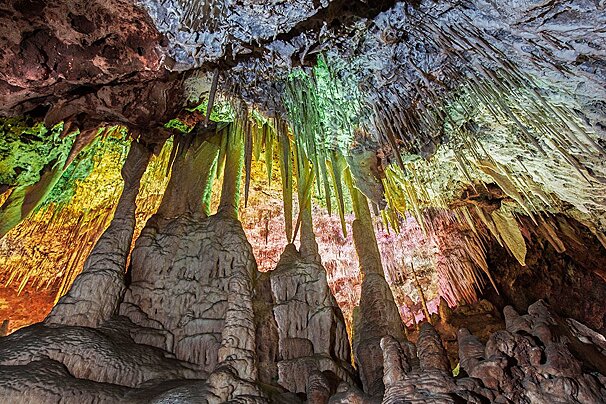
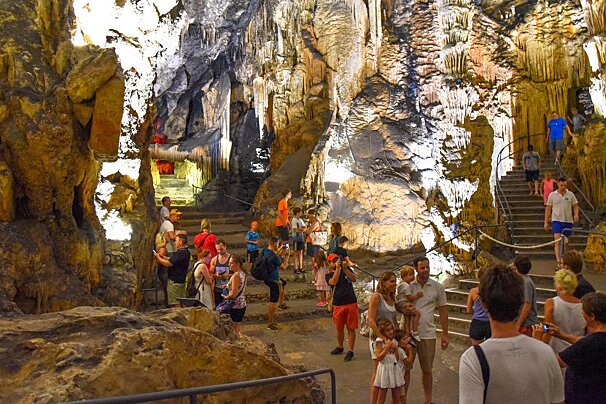
Dark and cool, these limestone caves on the edge of Porto Cristo have become one of Mallorca's top tourist sights. Groups walk along 1200m of smooth paths exploring the magnificent stalactite formations within.
This wild peninsula on Mallorca's northeast tip has stunning views, sandy beaches and the island's original luxury hotel. The 20-km drive from Port de Pollenca to Mallorca's most northerly point has scenery as dramatic as anyone could wish for. Cliffs 400 metres tall jut into the sea, their weird rock formations attracting nesting seabirds, while pine trees seem to grow out of the rocks.
You cannot miss these caves as you drive from Manacor to Porto Cristo. Most people only want to visit one set of caves during their time on Mallorca and the giant billboards and flags at the entrance are an attempt to ensure that this is the one. In fact you are better off continuing to the 'Cuevas del Drach' or up the coast to the 'Coves d'Arta'.
These caves near Arta, in the north-east of Mallorca, are a fascinating network of underground caverns whose weird stalactites and stalagmites conjure up mysterious images of Heaven and Hell. An early visitor was Jules Verne, the caves are said to have inspired his Journey to the Centre of the Earth.
Do not believe anyone who tells you that they have discovered the perfect unspoilt cove on the west coast - unless of course the name is Sa Calobra. This is indeed a beautiful spot, which is why tour buses pour in by the dozen every day, even in winter.
The Caves of Campanet are situated in the north of Mallorca in the foothills of the Tramuntana mountains. The caves cover a surface area of approximately 3,200 square metres at a depth of 50 metres
Find out all about what is happening in Mallorca and how to make the most of your time here. The latest news, reviews of fun activities, fabulous beaches, current events and the trendiest restaurants, as well as interviews with leading locals, insider's guides and our top choices for things to do, see, and experience on the island.
See allLatest News & ReviewsThe island hosts all sorts of events, including agricultural fairs in the spring and autumn, live music and DJs in the summer, religious fiestas and international sporting events. Some of the most popular are the Mallorca 312 cycling race in April, the Copa del Rey sailing regatta in July and the Moors vs Christians mock battle in September.
See allUpcoming Events